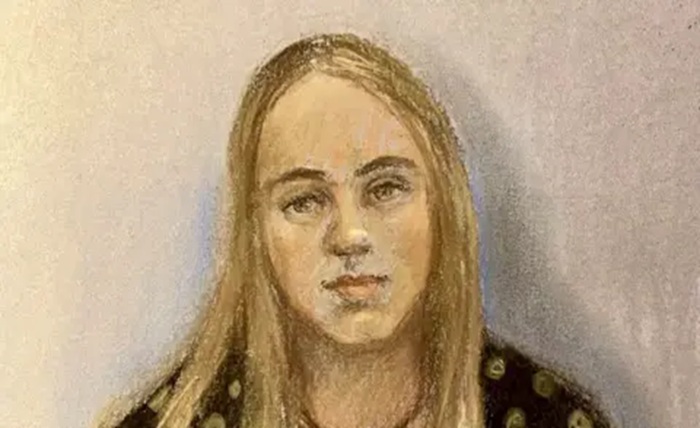
Who Is Amelie McCann?
Amelie McCann is the younger sister of the missing child Madeleine McCann, whose disappearance in 2007 shocked the world. When Madeleine vanished from a holiday apartment in Portugal, Amelie was only two years old — too young to remember much, yet destined to grow up under the weight of extraordinary public attention. Over time, Amelie McCann’s life became symbolically entwined with global fascination, grief, and an enduring longing for closure.
As she grew, Amelie McCann quietly navigated an existence shaped by tragedy and media scrutiny. Her childhood was not typical — it was marked by loss, uncertainty, and a spotlight she never asked for. Yet in her silence, Amelie McCann became more than a footnote in a missing‑person case; she became a living testament to resilience amid sorrow.
More than simply a sibling of a missing child, Amelie McCann’s story reflects the long shadow cast by loss — and the strength required to grow up in such circumstances.
Growing Up in the Public Eye: Childhood and Early Years of Amelie McCann
After the disappearance of Madeleine, the family of McCanns — including Amelie McCann — found themselves propelled into an intense, global media storm. For Amelie, these years were defined by a delicate balancing act: being a child, yet constantly associated with national headlines, speculation, public grief, and investigative scrutiny.
As a toddler, Amelie McCann had no real understanding of what had happened — but as she grew older, the weight of the case inevitably seeped into her existence. The public’s fascination with the mystery meant that every development touched her family, and by extension, her life.
Despite this, the family tried to shield Amelie McCann and her twin brother (when applicable) as much as possible — giving them privacy, protecting their identities during their minority, and striving to let them be kids away from the cruel glare of public curiosity. In this light, Amelie McCann’s early years represent a quiet but strong attempt to preserve innocence in a world intent on prying.
Over time, the story of the family evolved: the missing sister became one of the most high-profile missing‑person cases in recent history; the siblings—including Amelie McCann—continued life under a fragile combination of grief, hope, and a longing for normalcy.
Amelie McCann as a Symbol of Hope and Healing
In the aftermath of the tragedy, many saw Amelie McCann as a symbol of the possibility of healing — not necessarily through resolution, but through resilience, growth, and quiet continuity. In her existence, there is a reminder that life doesn’t end with loss; it continues, shaped by memory, longing, and the desire to carry forward in spite of pain.
Over the years, as the world debated, theorized, and argued about what might have happened to Madeleine, Amelie McCann grew up — with a childhood altered, but not destroyed. Her journey stands as a reflection of the human capacity to endure, adapt, and strive for normality, even when permanence seems out of reach.
Her presence — physical, emotional, symbolic — gave the broader story a human center: not just a missing child, but surviving siblings whose lives were irrevocably changed, yet who still carried hope and humanity.
In this light, Amelie McCann becomes more than a name tied to tragedy: she becomes a reminder that behind every sensational headline and media cycle, there are living people, enduring grief, and clinging to hope.
Recent Events: The 2025 Court Trial and Renewed Public Spotlight on Amelie McCann
In late 2025, the family of the missing girl faced a new emotional ordeal when a woman — Julia Wandelt — claimed to be their missing daughter, attempting to convince the family and the world that she was the long‑lost sibling. According to recent court proceedings, the woman contacted Amelie McCann, sending social‑media messages, letters and altered photographs, claiming to have memories of childhood moments with the family. Sky News+2upday.com+2
The court heard that some of these communications described intimate memories — such as playing childhood games (“ring‑a‑ring‑o’-roses”) — that the imposter allegedly “remembered” having with the McCann children. Amelie McCann testified that these messages felt “creepy” and emotionally manipulative. She stated she “always knew” the claimant was not her sister, but the repeated attempts at contact made the situation deeply unsettling. BBC Feeds+2The Standard+2
Further distress occurred when the claimant and an accomplice allegedly turned up at the family home in December 2024 — prompting security measures, including installation of a panic alarm that could directly alert police. Amelie McCann described such precautions as “not normal,” highlighting how invasive and frightening the harassment had become. Sky News+2LBC+2
This renewed spotlight brought old wounds back into focus — with Amelie McCann once more at the intersection of public attention, family trauma, and personal privacy.
The Personal Impact on Amelie McCann: Privacy, Trauma, and Resilience
For Amelie McCann, the resurgence of public and media scrutiny — after years of relative privacy — likely reopened emotional scars. The ordeal involving false claims, persistent messages, altered photos, and unwanted contact would be difficult for any adult to face; for Amelie, it brought back painful memories tied to a childhood shaped by loss and uncertainty.
Her testimony in court reveals not only courage — in confronting the harassment publicly — but also sensitivity: she acknowledged feeling uncomfortable, distressed, and emotionally manipulated. She refused to engage in DNA tests, knowing the claim was false in her heart, yet recognized how the situation affected not only her but her entire family. Sky News+2My Histro+2
The fact that the family felt compelled to install a panic button and strengthen security speaks volumes about the toll of prolonged public trauma on their mental health, and the lasting effects on their children — including Amelie McCann. Her quiet endurance through this episode adds another chapter to her life story: one defined not by sensational headlines, but by steadfastness and dignity.
Why Amelie McCann Matters — Beyond the Headlines
Many people know the name “McCann,” associated with tragedy, mystery, global investigations and media storms. But within that chaos lies a human story stretched across years: the story of siblings, grief, persistence, and the effort to build a life in spite of irrevocable loss. In that human story, Amelie McCann matters.
Her existence is a reminder that behind every missing‑person case are whole families — siblings, parents — whose lives are permanently altered. The public’s fixation often stops at the missing person, but people like Amelie McCann ensure that the story’s human dimension endures: memories, pain, love, hope.
Moreover, as time passes, the world’s attention shifts, media cycles move on, but the family continues to live with absence. In that context, the survival, growth, and quiet dignity of those left behind — like Amelie McCann — become acts of resilience.
Her story cautions us about the long-term human cost of tragedy, and the importance of empathy beyond sensationalism.
The Symbolic Legacy of Amelie McCann: Memory, Identity, and Strength
As the years go by, the fate of Madeleine remains uncertain — but the legacy of the McCann family lives through its surviving members, among them Amelie McCann. In her journey, there’s a symbolic weight: a testament to endurance, a reminder of memories lost and lives unsettled, but also of resilience, loyalty, and the quiet hope that persists even in adversity.
Amelie McCann’s life stands for something deeper than public fascination — for resilience in the face of despair, for identity shaped not merely by tragedy but by the strength to go on. Her presence reminds us that grief doesn’t always end with disappearances: sometimes it lives quietly, in the lives of siblings and loved ones, in their choices to keep living, remembering, hoping.
Her legacy may not be loud — it may not be defined by headlines — but it is real. And in a world hungry for closure and sensational updates, the symbolic legacy of Amelie McCann calls for patience, understanding, and respect for human dignity.
Conclusion
Amelie McCann is more than a name associated with a missing‑person case — she is a living testament to the human capacity for resilience, hope, and quiet endurance in the face of tragedy. Her story is not about dramatic headlines or public spectacles, but about what it means to grow up under the weight of unimaginable loss — and yet hold on. Over the years, Amelie McCann has navigated grief, media scrutiny, unwanted attention, and emotional manipulation — and in doing so, has shown courage, strength, and dignity.
Her journey reminds us that behind every sensational case are real people — siblings, children, individuals — whose lives are forever changed. In remembering Amelie McCann, we remember the human cost of tragedy, the complexity of grief, and the quiet power of surviving with compassion, love, and hope.
FAQs
Q1: Who is Amelie McCann?
A1: Amelie McCann is the younger sister of missing child Madeleine McCann. She was two years old when Madeleine disappeared in 2007, and has grown up largely out of public view — until recent years.
Q2: Why has Amelie McCann come into the spotlight again in 2025?
A2: In 2025, a woman named Julia Wandelt claimed to be the missing sister, contacted Amelie with social media messages and letters, and even sent altered photos and demanded DNA tests. This led to court proceedings where Amelie testified about how distressing the claims were. Sky News+2upday.com+2
Q3: How did Amelie McCann react to the stalker’s messages and attempts to impersonate her sister?
A3: Amelie McCann described the messages and altered photos as “creepy” and emotionally manipulative, saying she “always knew” the claimant wasn’t her sister. She refused to take a DNA test and expressed discomfort at the emotional distress inflicted on her and her family. BBC Feeds+2The Standard+2
Q4: Has the family taken any security measures because of this harassment?
A4: Yes. According to her testimony, the family installed a panic alarm connected to police, CCTV and a door‑bell camera to feel safer, indicating how the harassment disrupted their sense of security at home. Sky News+1
Q5: What does the story of Amelie McCann teach us?
A5: The story of Amelie McCann teaches us about resilience, human dignity, and the long-term impact of tragedy on families. It reminds us that behind widely publicized cases are individuals who live with grief, hope, and the courage to go on — often far from the spotlight.